
from US$22.21
Japan, Ogasawara
Stargazing Tour - Observe the best starry sky in Japan, Ogasawara!
Explore
Explore the profound quiet of the universe through NASA's high-resolution archives. Perfect for your stargazing journey.
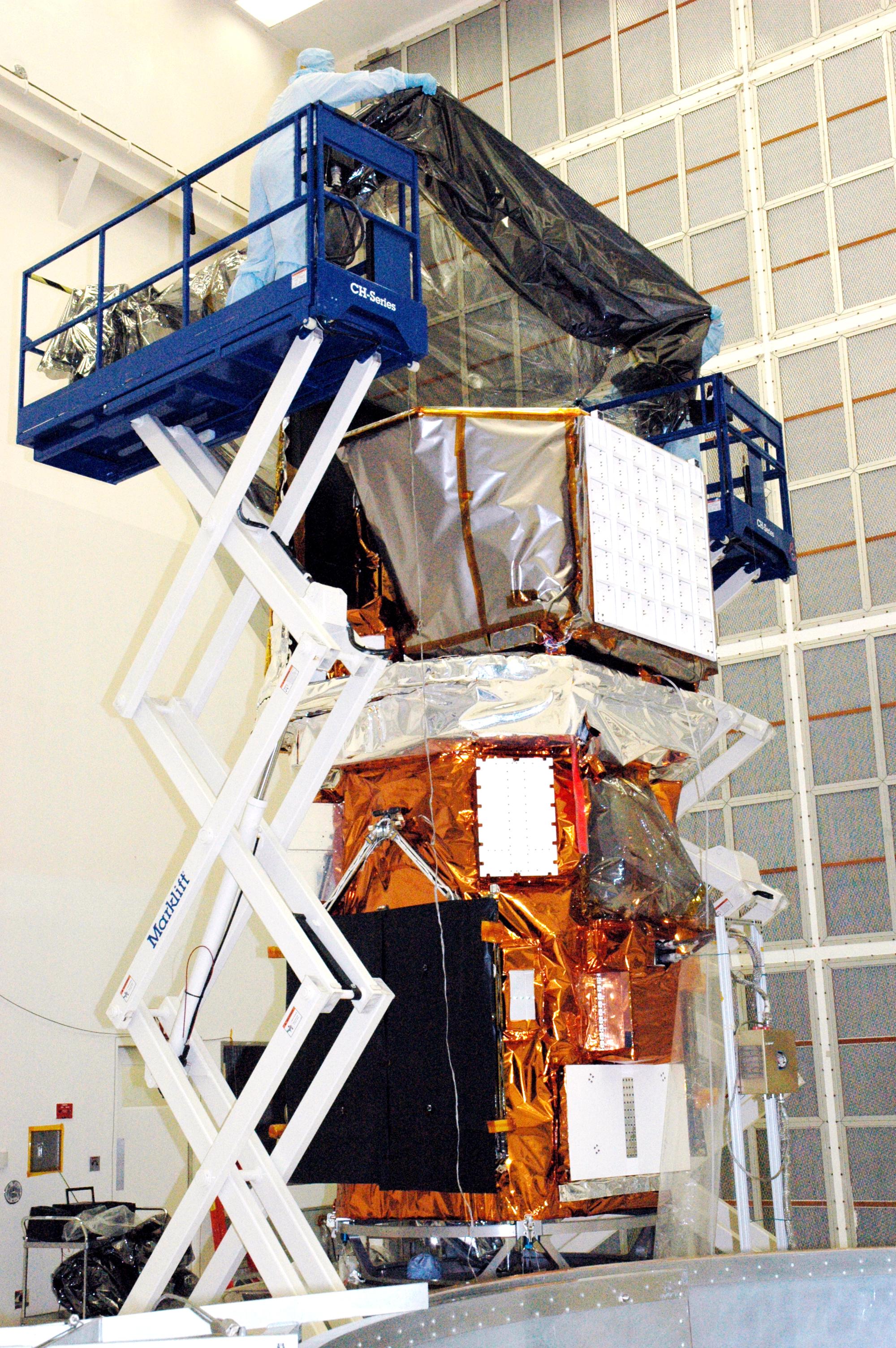
KENNEDY SPACE CENTER, FLA. - In Hangar AE at Cape Canaveral Air Force Station (CCAFS) in Florida, technicians with Spectrum Astro Inc. prepare to lower the protective cover over the Swift spacecraft before moving it to the launch pad. The launch of the Swift observatory, a NASA spacecraft to pinpoint the location of gamma-ray bursts, is scheduled for Nov. 17 from Pad 17-A on CCAFS. Liftoff aboard a Boeing Delta II rocket is targeted at the opening of a one-hour launch window beginning at 12:09 p.m. EST. Gamma-ray bursts are distant, yet fleeting explosions that appear to signal the births of black holes. They are the most powerful explosions known in the universe, emitting more than 100 billion times the energy that the Sun emits in a year. Yet they last only from a few milliseconds to a few minutes, never to appear in the same spot again.
This particular celestial object, KSC-04pd-2247, was captured by NASA's deep space observatories. While its specific historical mythology remains a mystery, objects of this type are crucial for our understanding of cosmic evolution and stellar life cycles.
To observe phenomena similar to this, we recommend using high-contrast filters and a motorized equatorial mount.
Discover nebula-themed journey sites designed for peaceful observation.
Japan, Ogasawara
Stargazing Tour - Observe the best starry sky in Japan, Ogasawara!
ExploreNew Zealand
Small-Group Refined Experience - Stargazing English Tour in Tekapo | New Zealand
ExploreHawaii
Hawaii Big Island: Mauna Kea Stargazing Half-Day Tour with Transfer Service in Waikoloa, Kona, and Hilo
Explore
NASA often uses 'false color' techniques. Scientists map invisible wavelengths (like infrared) or specific gases to visible colors (red, green, blue) to highlight the nebula's structural details.
While some bright nebulas are visible with entry-level telescopes, capturing these stunning details usually requires deep-sky astrophotography equipment and long exposures.

